
Each month, Rachel Lambert – foraging guide, artisan maker and award-winning author – will be writing a journal for us, reflecting on the changing seasons and observations on nature and the landscape around us. Rosyansow is the Cornish word for wanderings or ramblings, an apt name for a thoughtful conversation about what’s in season in nature right now.
For the month of July , she has written about kelp forests.
July’s theme at the Gardeners’ house returned to trees – partly to honour those that crashed to the ground earlier this year in the storms, including two oak trees in Morrab Gardens. I too want to honour trees, and, having previously written about Apple, Hawthorn, Oak, Tamarisk and Willow trees, I thought I’d widen this blog to include a different type of ‘forest’.
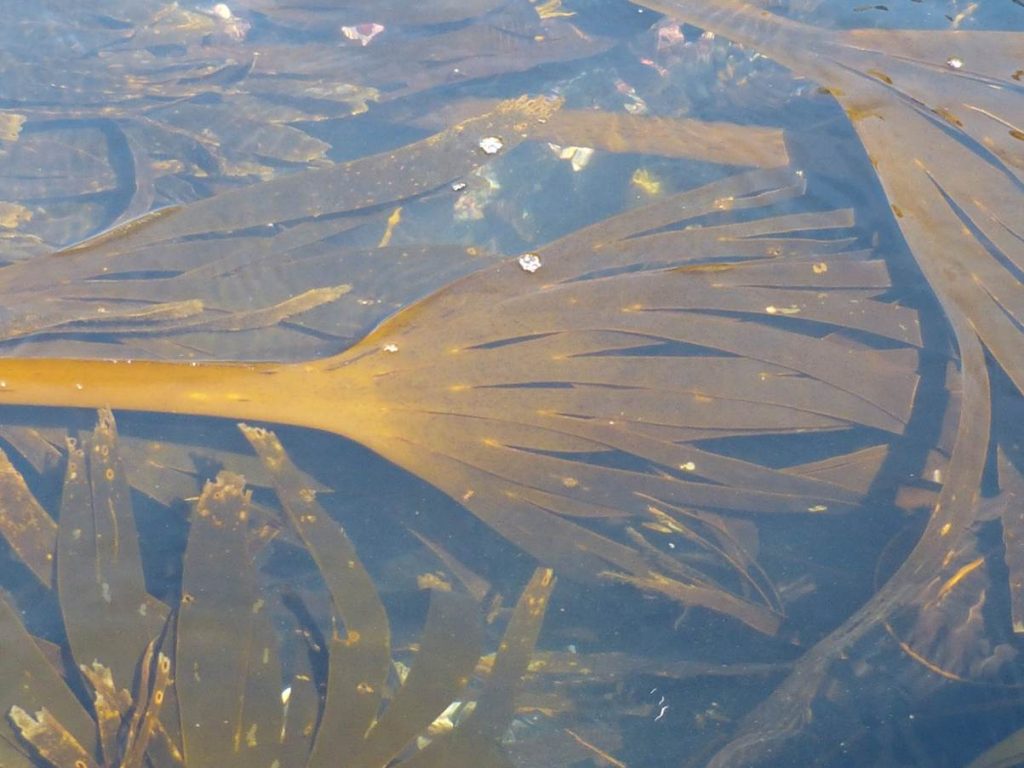
Furbellows (Kelp) in West Cornwall. Photo ©Rachel Lambert
Two of the many vital roles that trees provide is to produce huge amounts of oxygen and to store carbon. But trees don’t do this alone, one other significantly large producer of oxygen and a large store of carbon is seaweed. So, for this blog I’m going to focus on kelp forests – a family of large seaweed.
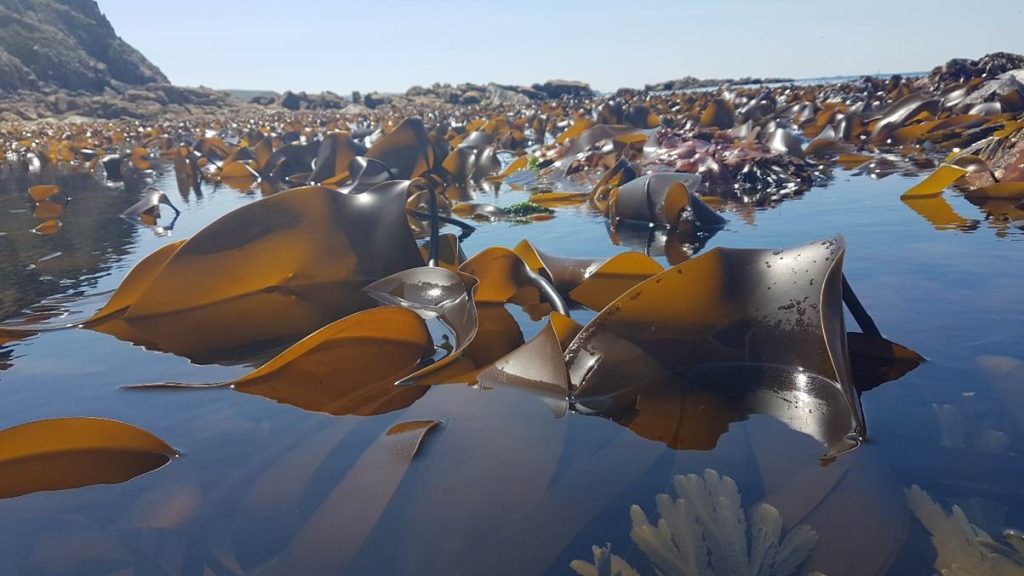
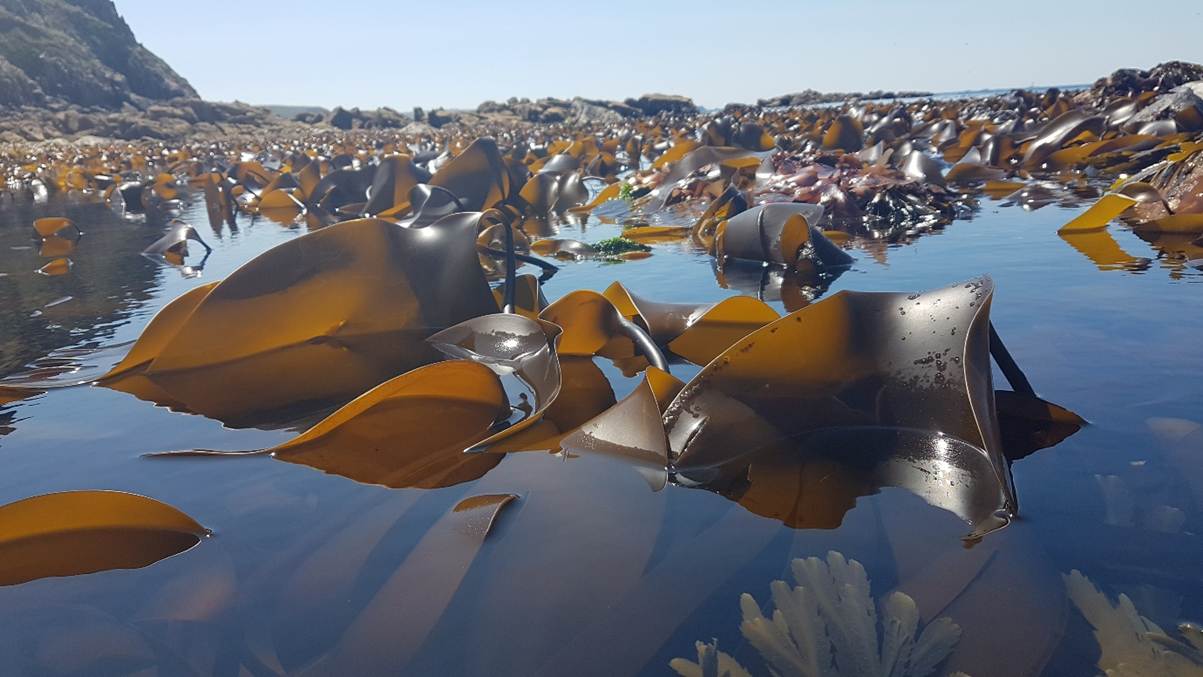
Oarweed (Kelp) at Cape Cornwall. Photo ©Rachel Lambert
Kelp – the forests of the sea
Kelp is often the hidden forest to our human eyes, revealed just twice a day at low tide. And of course what we see above the surface is just a small part of the picture. Over 70% of the planet is covered with water and over 90% of that is ocean. In the British Isles alone, kelp forests are estimated to be along 60% of our coastal shores, though in other areas of the UK and world they are in rapid decline.
Like trees, kelp hosts a diverse eco-system. Kelp is a family of large, brown seaweeds, some kelps, such as Giant Kelp (Macrocystis pyrifera) are over 50 metres long. Here in Cornwall, we have several species of Kelp, including; Oarweed (Laminaria digitata), Forest Kelp (Laminaria hyperborea), Furbellows (Saccorhiza polyschides), Golden Kelp (Laminaria ochroleuca) and Sugar Kelp (Saccharina latissimi).
It is said that between 50-80% of our oxygen is produced by marine algae, which includes seaweeds. Being the largest family of seaweeds, kelp plays a significant role in keeping our planet habitable, and it needs protecting.
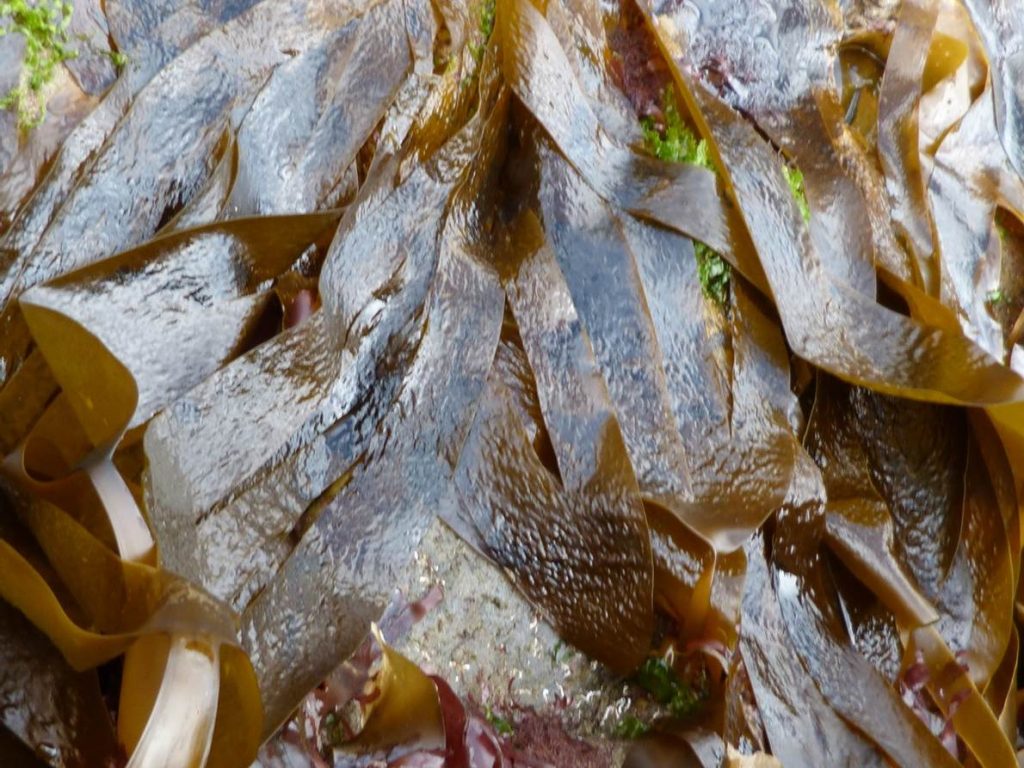
Kelp in Mounts Bay. Photo ©Rachel Lambert
Protecting kelp forests
Several factors threaten kelp, including pollution, coastline erosion, warming seas, dredging and trawling. A trial in Sussex, where the kelp forests were in deep decline since the 1980s shows that kelp forests can recover, but it takes time. Measures put in place by the Sussex Inshore Fisheries and Conservation Authority (IFCA) to ban trawling in certain areas has helped, but it may not be enough. You can read the full report here
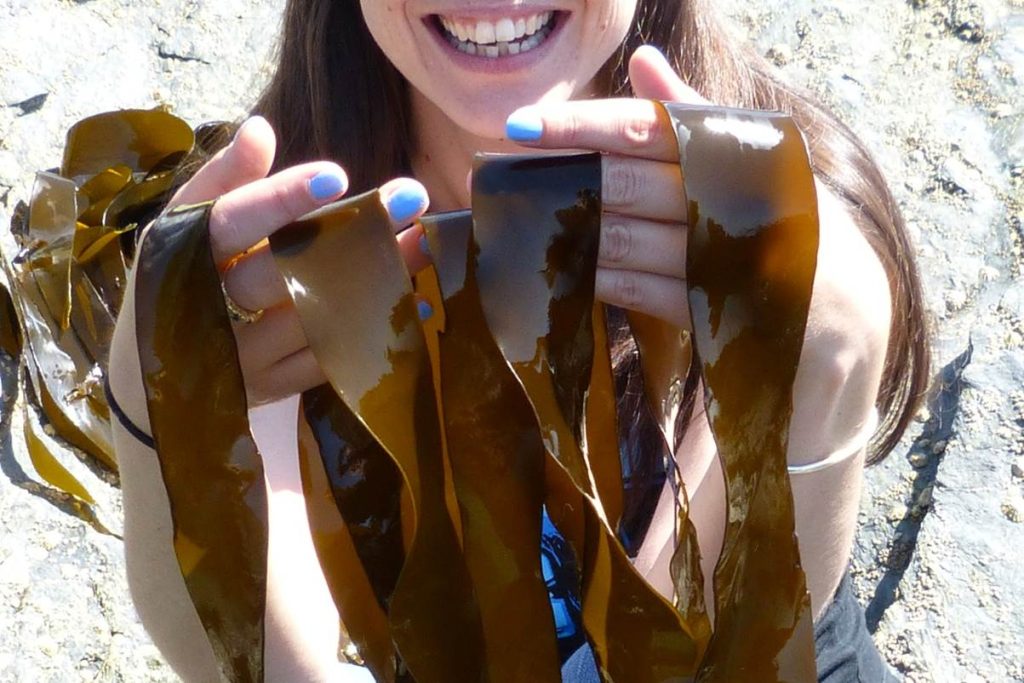
Kelp (Oarweed) in West Penwith. Photo ©Rachel Lambert
From land forests to sea forests
Looking out towards St Michael’s Mount, it is hard to imagine that this was once a forest of trees reaching right out to the Isles of Scilly. Nowadays, and for approximately the last 10,000 years, those forests have been replaced with ones under the sea. Kelp loves rocky shores and several varieties hang off the rocks surrounding the Mount.
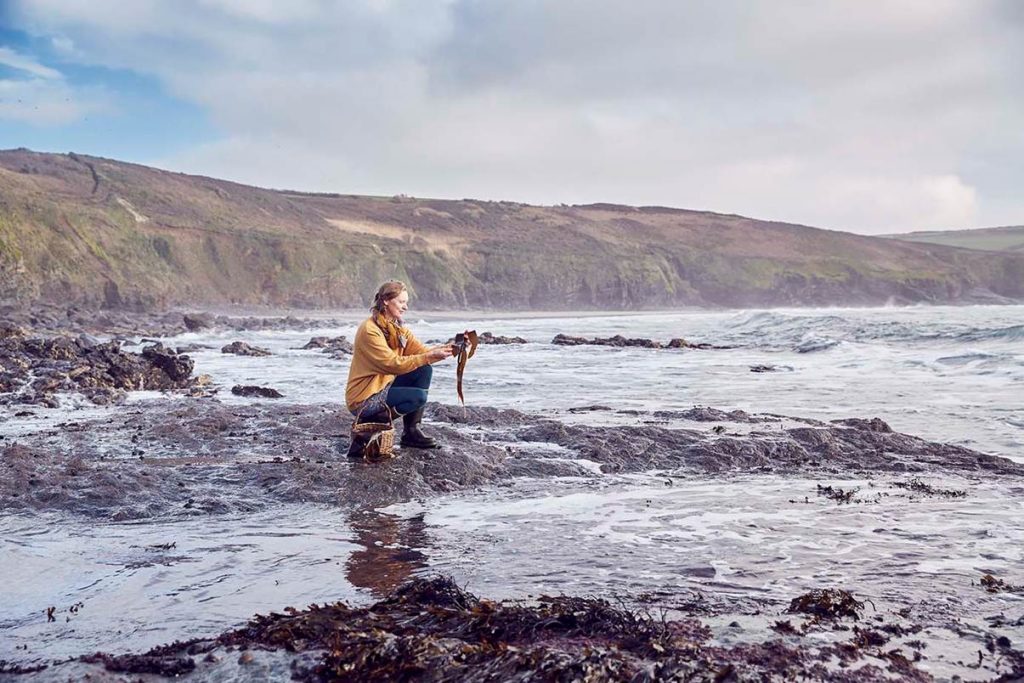
Forager Rachel Lambert gathering kelp: Photo ©Allun Calender
What we can all do to protect the kelp forests
Here’s five suggestions of things you can do to help kelp forests:
- Reduce your carbon footprint. Start by finding out how much carbon you use using the WWF Footprint Calculator (free tool)
- Change your energy provider to one that uses green energy (solar and wind), like 100Green
- Choose chemical-free cleaning products, check out the range at Refillution at Wharfside in Penzance
- Choose line-caught fish over trawled flat-fish
- If you have a boat, understand where kelp forests are, so you can avoid them at low tide when driving over them could cause damage
ADDITIONAL SOURCES:
What Percent of Earth’s Oxygen Comes From the Ocean? – ScienceInsights