
Each month, Rachel Lambert – foraging guide, artisan maker and award-winning author – will be writing a journal for us, reflecting on the changing seasons and observations on nature and the landscape around us. Rosyansow is the Cornish word for wanderings or ramblings, an apt name for a thoughtful conversation about what’s in season in nature right now.
For the month of June, she has written about insects, pollination and the hawthorn tree for us – very apt in a month in which we’re running lots of entomology events!
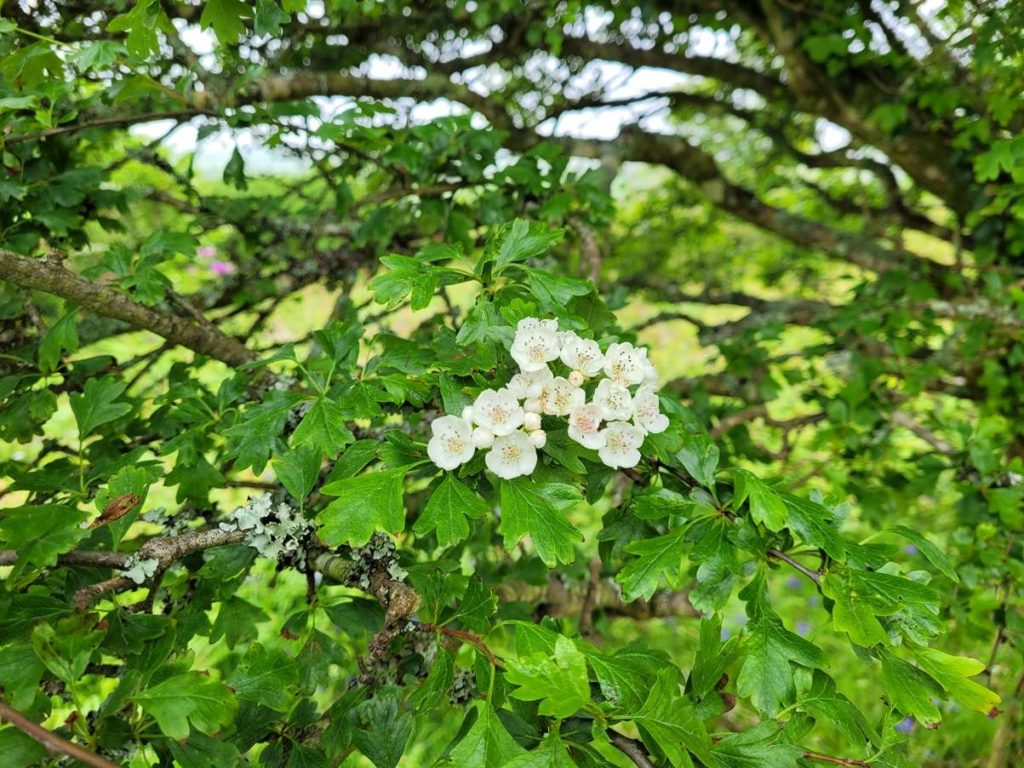
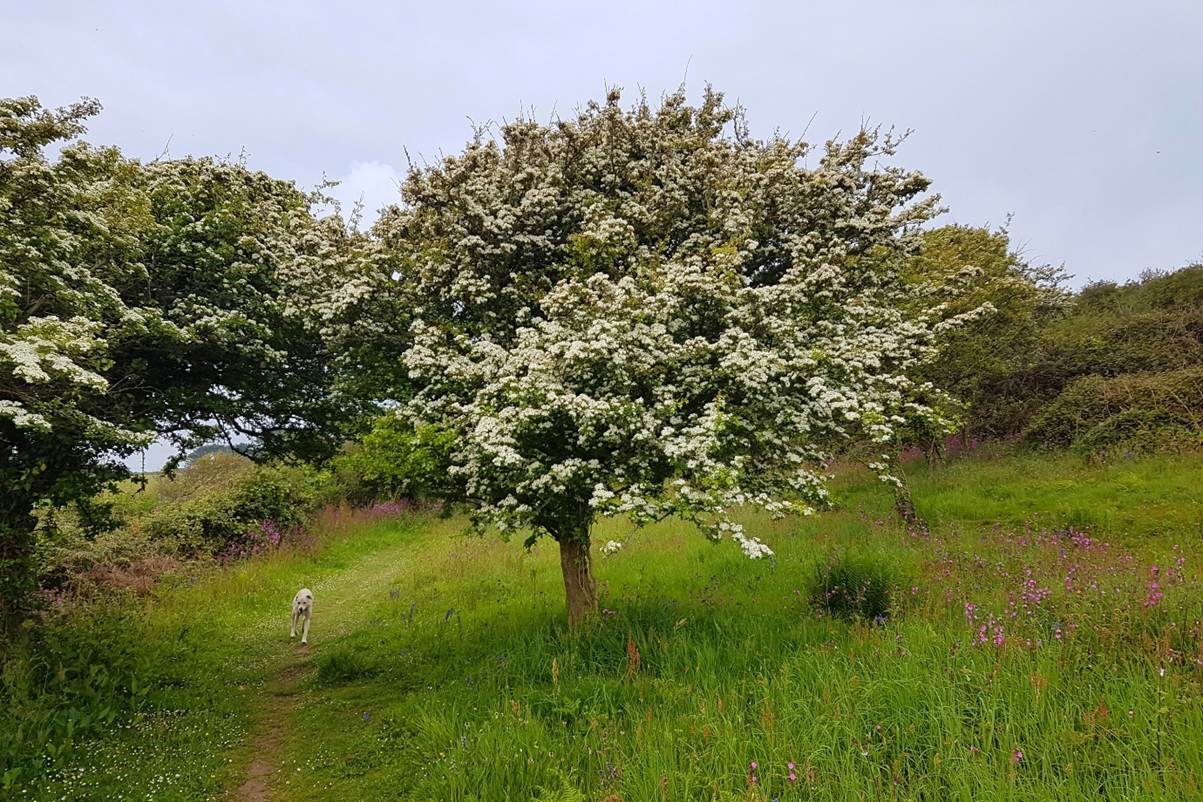
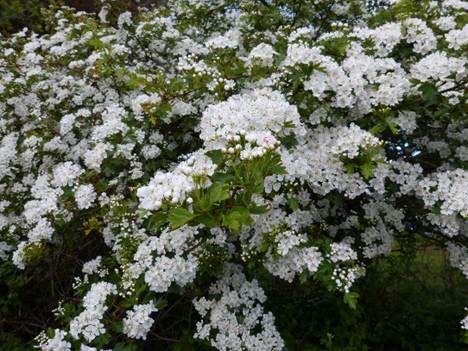
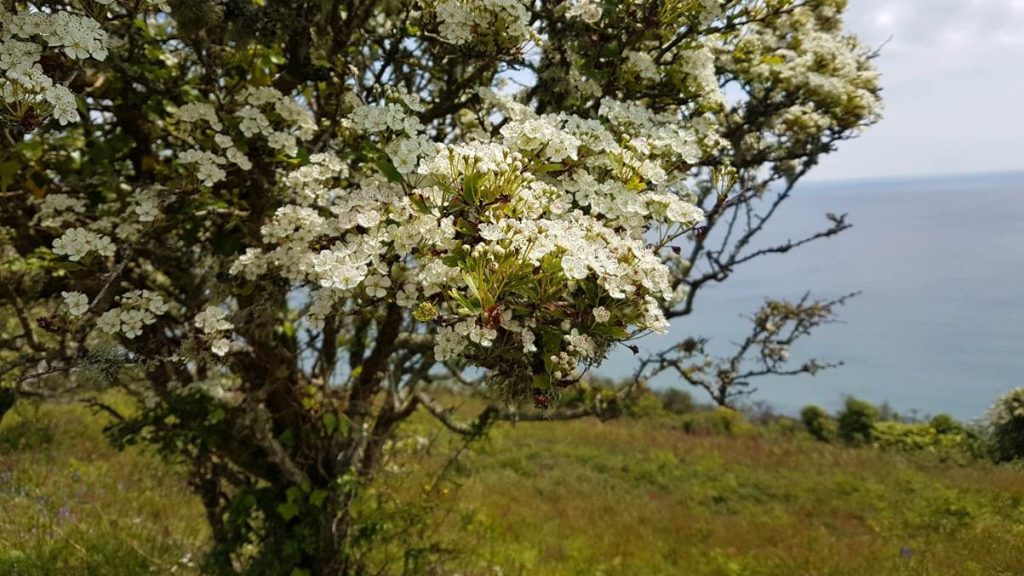
Hawthorn Tree/May tree flowering in West Penwith. Photo by ©Rachel Lambert
As May unfolds into June, and the last of the flowers of the Hawthorn Tree (Crataegus Monogyna) blossom, I wanted to focus on insects and plant pollinators.
Bees, beetles, butterflies, mosquitos, moths and wasps are all important pollinators. Surprisingly, some birds, bats, mammals and even lizards can be a key part of the pollination process too.
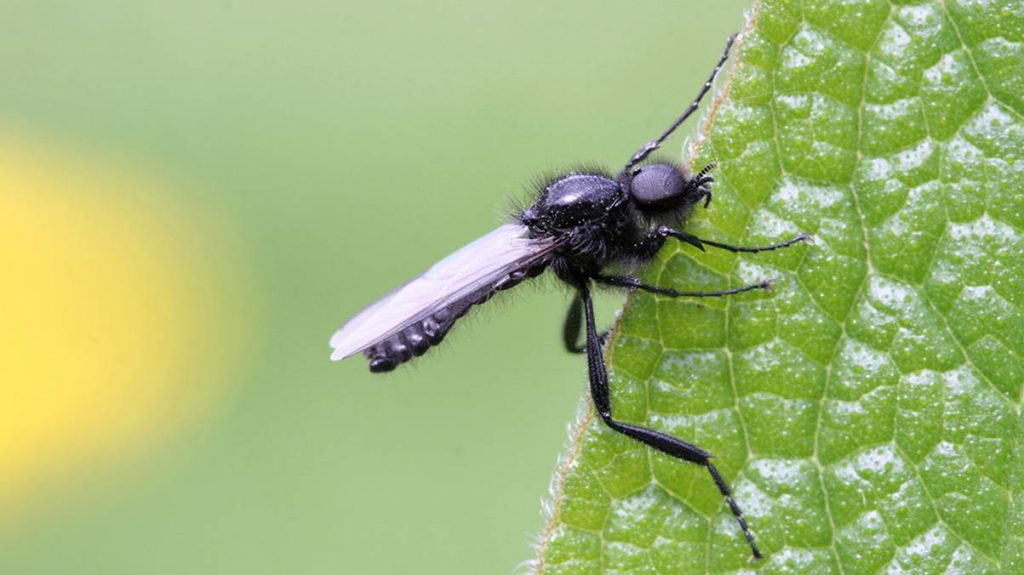
Hawthorn/St Mark’s fly (Bibio marci) image by ©Kim Taylor
The Hawthorn Fly
Did you know that there is a fly called the Hawthorn fly or St Mark’s fly (Bibio marci) that feeds off the nectar of hawthorn flowers? Black and shiny, these flies start to appear in late April and are important spring pollinators.
Hawthorn flies are short lived; their pollinating efforts being focused, slow at their work, but effective. You can see them from April to June hovering in woodland edges, above hedges and on the hawthorn tree, with their long legs and bulbous eyes.
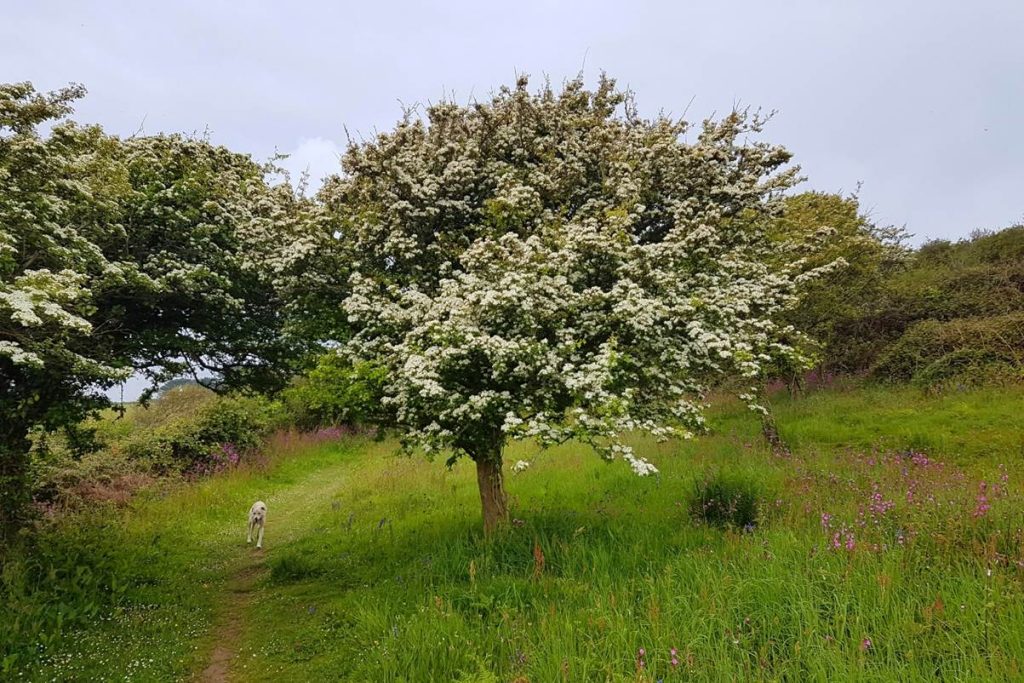
Species supported by the Hawthorn Tree
Did you know that the humble hawthorn tree, seen twisted and bracing itself against the wind and weather in hedgerows and hilltops, can support up to 300 different species from birds to insects, moths to dormice?
There is even a specific Hawthorn moth (Scythropia crataegella), whose main food is hawthorn leaves. It is normally spotted from May through to late September and is fairly common in the south of England, having been first recorded in 1767.
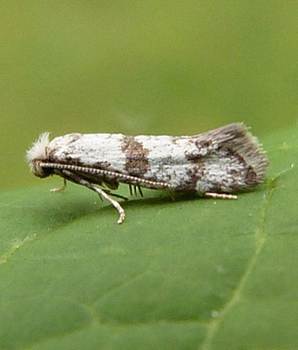
Hawthorn moth, image by ©Graham Calow
Here at the Gardeners’ House archive, the Wayside and Woodland Trees book tells of how horses and cattle like to munch on its young growth. The Hawthorn’s latin name – Crataegus monogyna – derives from kratos, meaning strength.
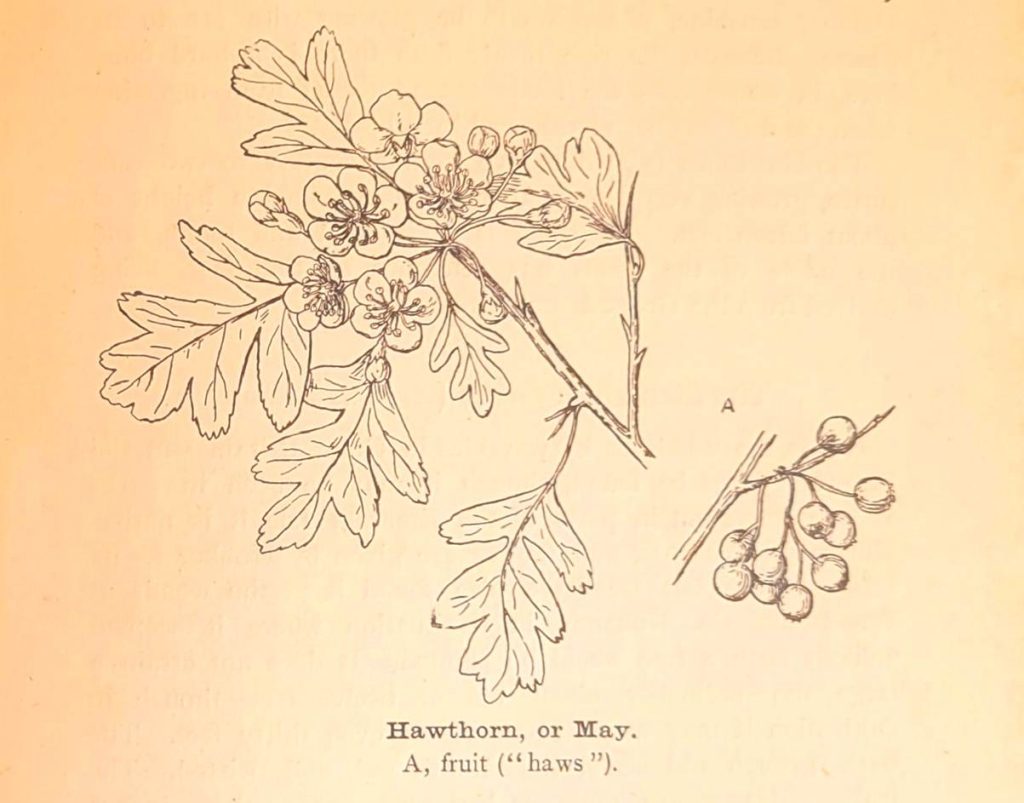
How is the hawthorn pollinated?
The hawthorn is actually pollinated by a combination of bees and beetles, supported by the wind and occasionally self-pollinates too. The pollination of the hawthorn means that the tree will flower well, providing food to species like the dormouse and moths as well increasing the bounty of fruit that comes later in autumn. Those fruits can be made into savoury and sweet recipes from hawthorn ketchup to haw berry jam for humans and are valuable nutrition for birds and mammals straight from the tree.
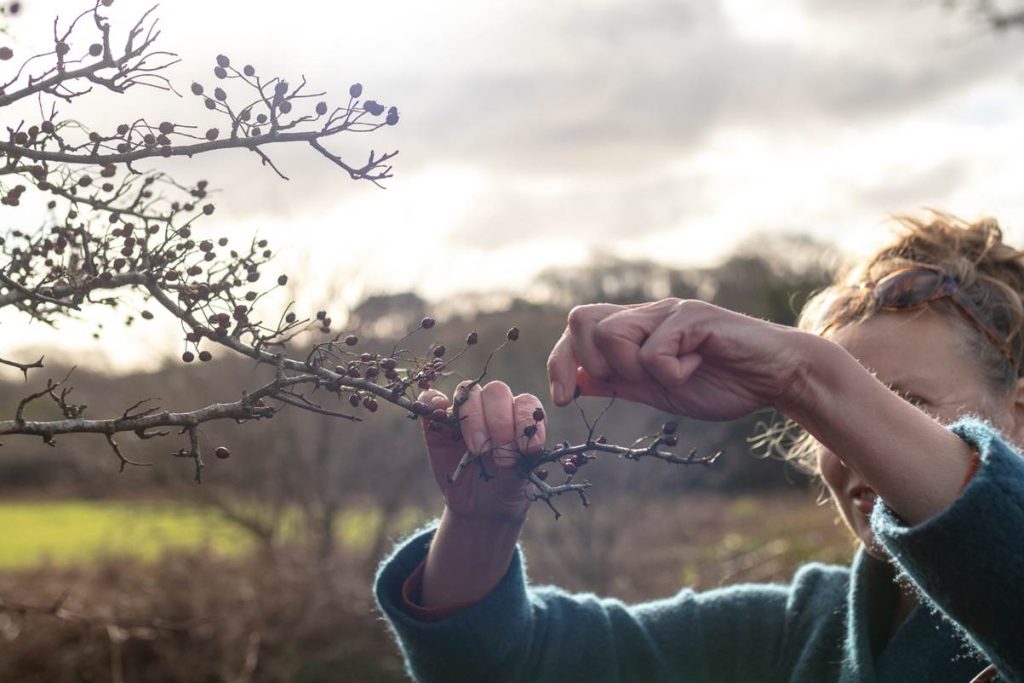
(author picking haw berries in autumn from the Hawthorn Tree)
The Hawthorn Tree and Climate Change
The hawthorn tree is also known as theMay tree, as traditionally the flowers start appearing in May. However, as our climate changes this isn’t always the case. Speaking to a foraging colleague in Belgium, she speculated whether the name needed to change to the April Tree as it is flowering earlier and earlier in Europe. It’s a fair point, though doesn’t roll off the tongue quite as easily as May tree!
In the right conditions, hawthorn trees can live up to 400 years and are a pagan symbol of fertility. Let’s support the insects and wildlife that support them to ensure their longevity continues.
Insect events at The Gardeners’ House
Collections Care Talk: How to Spot and Prevent Insect Pests Thursday 11 June, 2:30–3:30pm | Pay what you can: £1, £3, or £5
Join our Collections Manager Emily for a fascinating look at the insect pests that can damage historic buildings and collections — and learn practical prevention techniques you can use at home too. A brilliant talk for anyone who loves old things and wants to keep them that way.
Moth Talk and Trap Friday 19 June, 6–8pm | Pay what you can: £2–£10
Step into the secret nighttime world of moths with expert Dr Phil Sterling. After an engaging evening talk, we’ll be setting moth traps out in the sensory garden to capture the summer moths of Morrab. The perfect start to a very special moth-filled weekend.
Moth Breakfast Saturday 20 June, 8–10am | Pay what you can: £2–£10
Don’t worry – we won’t be eating moths! Join us for tea, coffee, and pastries as we release and identify the previous night’s moth catch together. Artist Melanie Miller will also be on hand to help you create your own beautiful paper moth to take home. A truly magical morning.
Paper Moth Making Saturday 20 June, 10:30am–12pm | Free (donations welcome)
Missed the Moth Breakfast? Melanie Miller’s paper moth making session is open to everyone as a free drop-in. All welcome — whether you’re a moth enthusiast or just fancy making something lovely.
Free Family Film Day Saturday 20 June, 10am–2pm | Free drop-in
Pop into the Gardeners’ House for a cosy, family-friendly film experience. We’ll be showing a loop of short films in support of this year’s Refugee Week. Come and go as you please.