
Each month, Rachel Lambert – foraging guide, artisan maker and award-winning author – will be writing a journal for us, reflecting on the changing seasons and observations on nature and landscape around us. Rosyansow is the Cornish word for wanderings or ramblings, and for the month of February, she has written about willow for us.
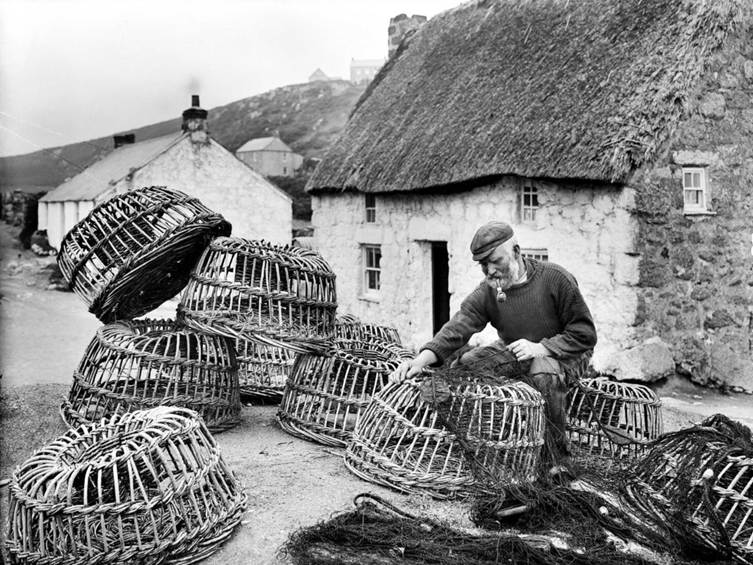
Bill Harvey inspecting fishing nets, Porthgwarra, June 1903: From the collection of the RIC (Photographer: Herbert Hughes)
‘Few persons are aware of how very large a number of species belong to the genus Willow.’
from The Gardener’s House archive: Wayside and Woodland Trees. A Pocket Guide to the British Sylva by Edward Step F.L.S
The willow, or withie , has been instrumental in the infrastructure of Cornwall for hundreds – if not thousands – of years, from basket making, living fencing, crab and lobster pots to storage pots. Nowadays the craft of making withy pots is on the list of critically endangered crafts.
Withy pot is the term used to describe crab and lobster pots in particular, and just a handful of traditional makers remain in Cornwall. Community artist Anna Pope dedicated a whole exhibition called ‘Withy Lore’ to this dying craft.
‘Master of the Withy’ short film by Storylines as part of the Withy Lore exhibition
Past, present and future
In the 1960s and 1970s, the naturally biodegradable withy pot started to be replaced with pots made of synthetic materials. These new pots last a lot longer but in storm conditions can be lost and any trapped crabs or lobsters will go down with them. With an increasing amount of plastics and man-made waste washing up on our shores, the humble withy pot offers a sustainable solution.
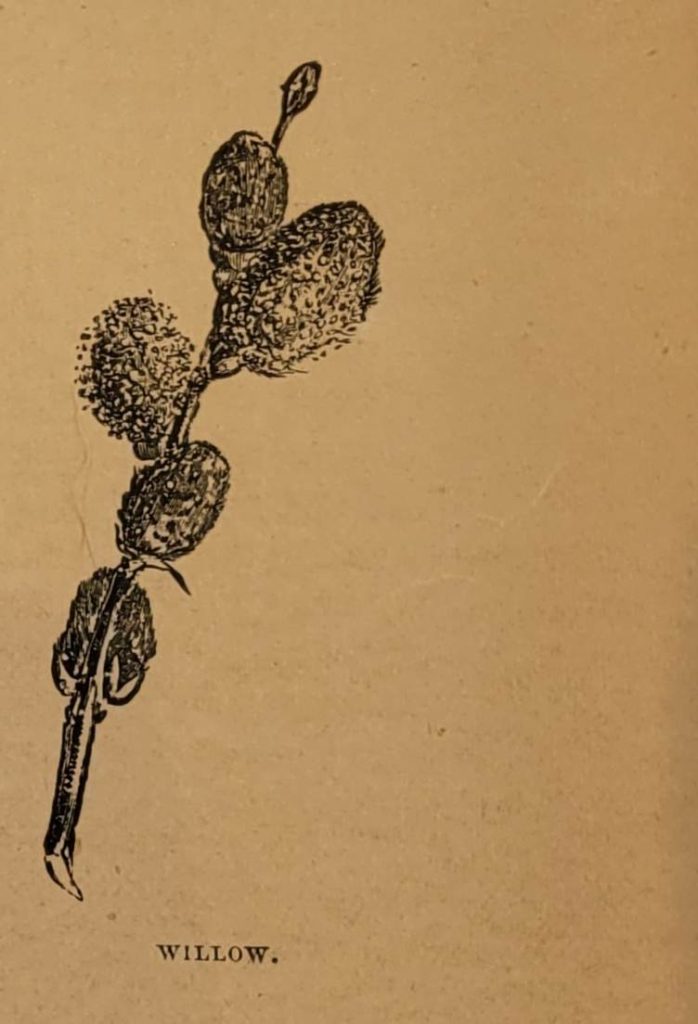
(image from The Gardeners’ House archive)
Goat Willow
One of our common hedgerow willows is the Goat willow (Salix caprae) and is essential for early pollinators as we head towards spring. They are a common sight along our Cornish roadsides and in our plentiful damp areas. Perhaps you’ve seen it on your walks or when driving?
…’the common coppice and hedge willow, which affords so an early banquet for the bee. It may readily be distinguished by its purplish-brown branches, which are covered with minute down when young, and by its large broad leaves, which are wavy at the edge and densely clothed beneath with soft, white, cottony down.’
Text extract from The Gardeners’ House archive
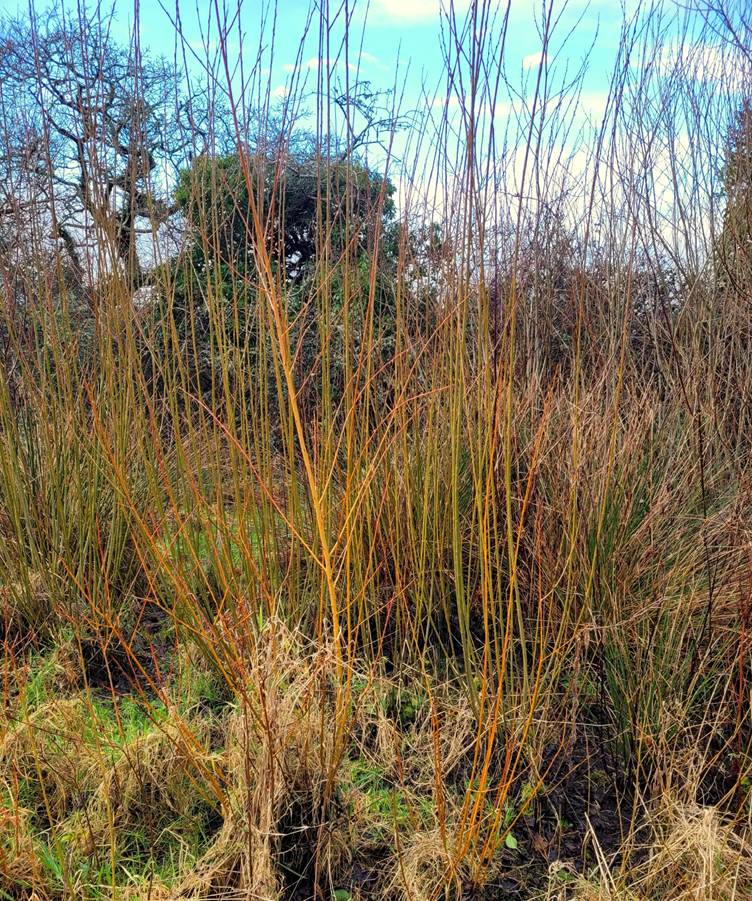
Willow for basket making
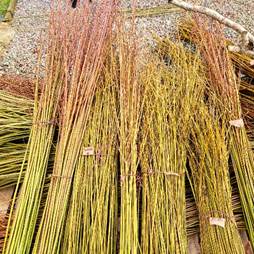
In comparison, the willow stems used for baskets often come in an array of colours and also grow well here in Cornwall. I caught up with Angela Firth of Bojorrow Baskets to see her crop of willow growing on the Lizard.
Angela is one of several professional basket makers here in Cornwall using a mixture of traditional and contemporary techniques. I was especially impressed with Angela’s traditional ‘North Devon Maund’ which would have been used by farmer’s wives in the pannier markets to show their wares, the lid doubling as a propped-up table to display from.
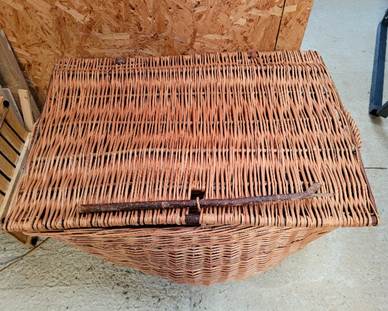
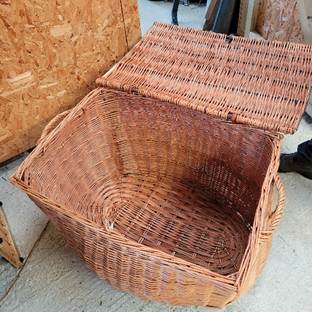
According to texts from The Gardeners’ House archive, the best willow for basket making is the common osier, Salix viminalis and the three-stamened osier, Salix triandra, both being perfect for ‘naturally moist situations’ as is Cornwall!
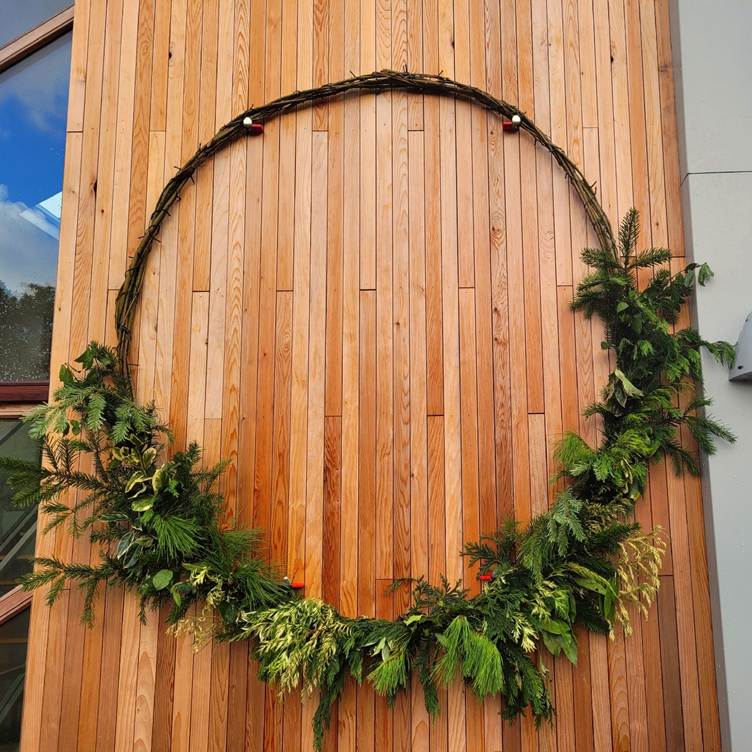
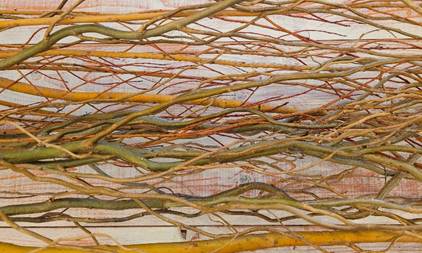
Osiers is the name given to the long stemmed, long-leaved willows that are used for basket making. Here at The Gardeners’ House you may have seen various creations from willow, like the ginormous winter fayre wreath that decorated the outside wall, or the beautiful wavy willow donated by a local person.
Willow – or withies if you prefer – are definitely a living, growing part of our community here and long many their uses and appreciation last.