
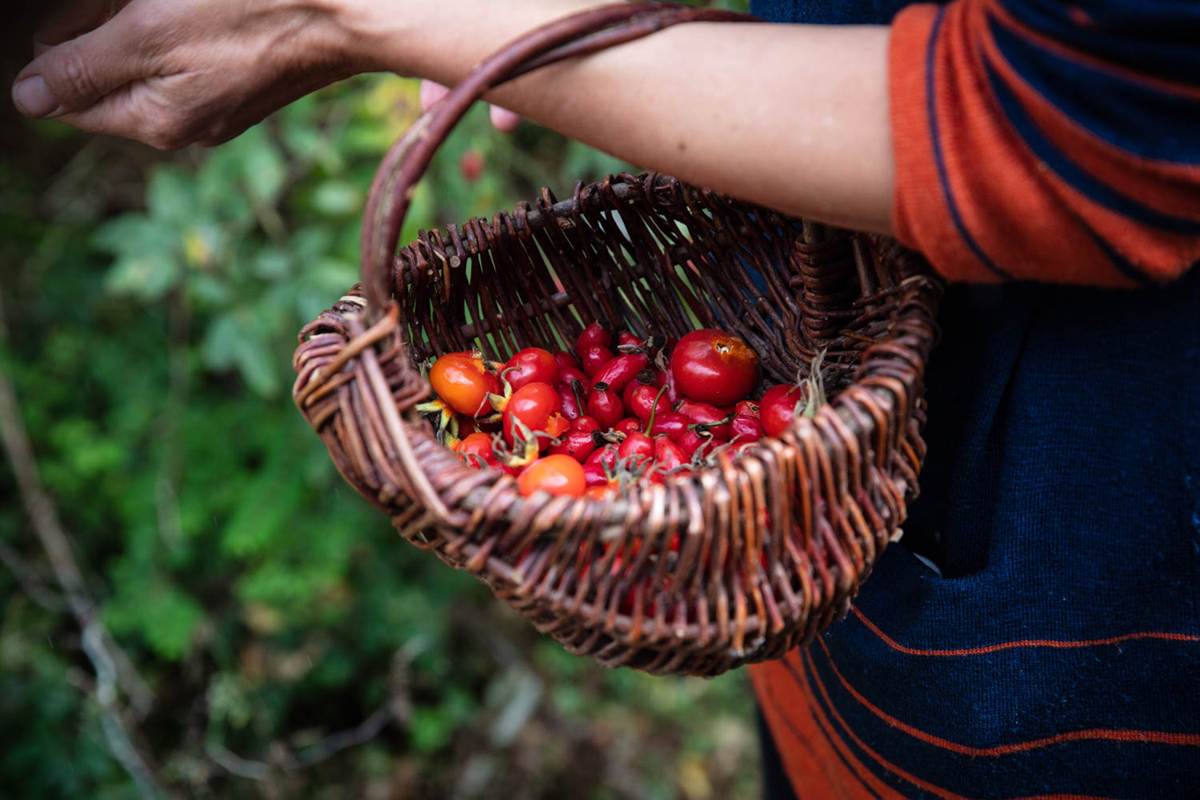
Each month, Rachel Lambert – foraging guide, artisan maker and award-winning author – will be writing a journal for us, reflecting on the changing seasons and observations on nature and the landscape around us. Rosyansow is the Cornish word for wanderings or ramblings, an apt name for a thoughtful conversation about what’s in season in nature right now.
For the month of September, in celebration of our changing seasons, she has written about fruition.
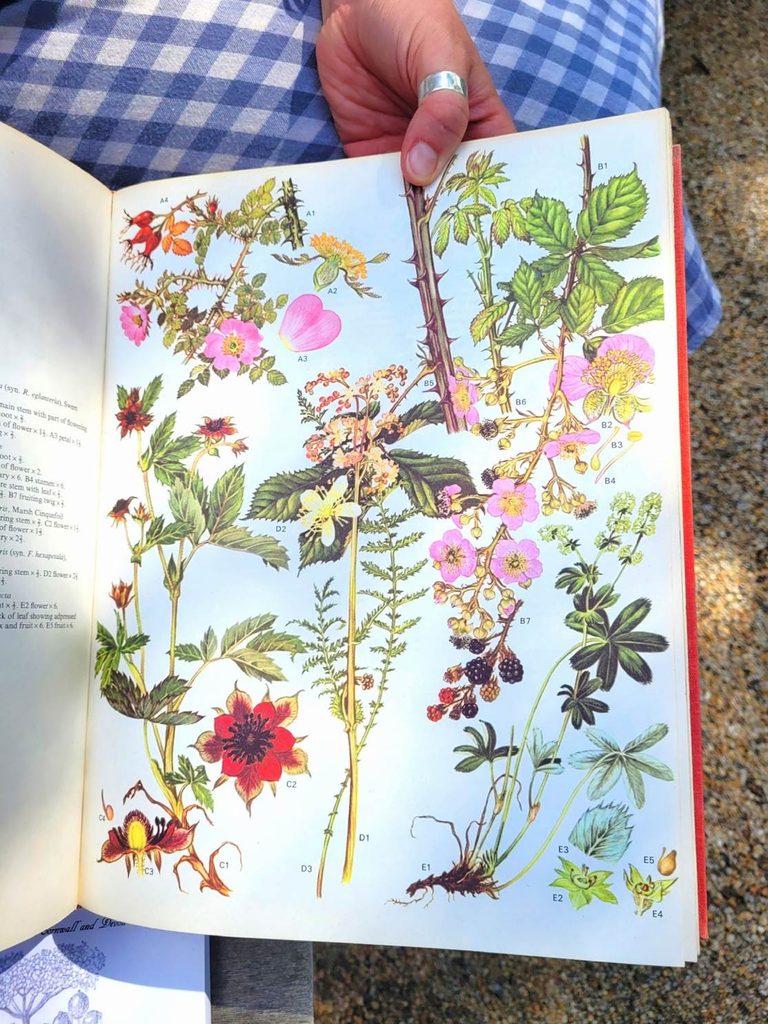
Illustrations of brambles and other plants from ‘Wild Flowers of the World’ by Brian Morley, paintings by Barbara Everard, all from the Gardeners’ House archive
It’s getting fruity around here, yes things are getting juicy. As the berries, fruits and seeds plump up and ripen it’s a good time to reflect on the summer and gather in all that delicious sunny energy for the autumn ahead.
Here at the Gardeners’ House there’s lots of analogies that can be made with the archive and living heritage – a growing collection of local memories that relate to nature, community and this land surrounding us. Now into it’s second year of opening its doors to the public and delivering a creative and inspiring array of activities, The Gardeners’ House Collections Manager Emily has been working hard to edit, document and strengthen the archival material, collecting the best and finding ways to share this heritage material with visitors.
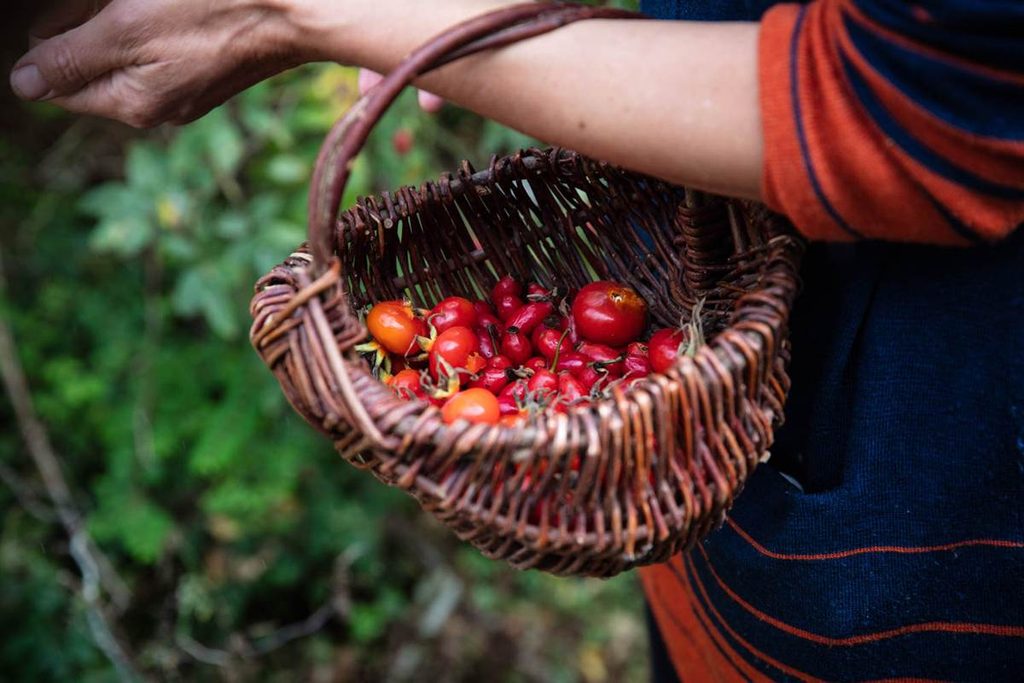
Collecting ripe rosehips from Dog rose and Japanese roses locally. Photo by @Elliott White
Gathering the harvest
Harvesting the cultivated and wild produce here in Cornwall is always going to be part of our heritage and story. From apples and crab apples, to blackberries, sloes, haw berries, bilberries, elderberries, wild and grown strawberries, rosehips and even rowan berries there’s plenty of local fruits to celebrate.
At Trevaskis Farm at Connor Downs near Hayle, you can also ‘pick your own’ raspberries, strawberries, plums, cultivated blackberries and white currants. Picking availability changing with the season, of course.
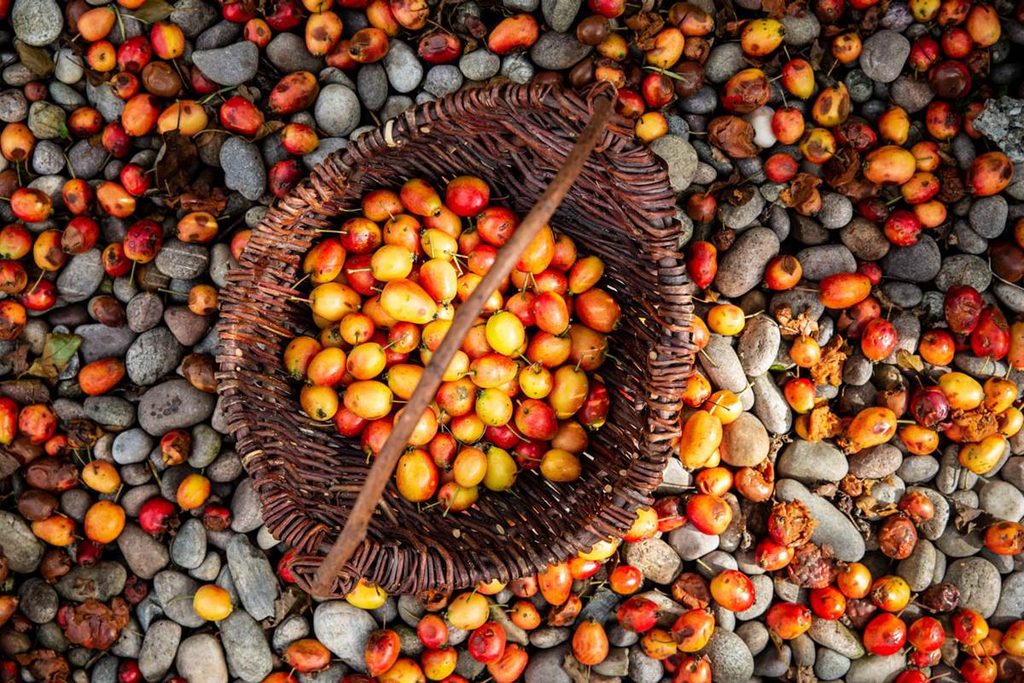
Gathering crab apples in West Penwith. Photo by @Elliott White
For a long time, apples have played the role of perfect companion in many jams and preserves at this time of year, with their natural pectin to ‘set’ them easily.
How about;
- Blackberry and apple pie
- Rosehip and apple jelly
- Sloe and apple jam
- Rowan and apple wine
- Apple and elderberry jam
Cornish varieties of apple include; Cornish Mother, Pine, Aromatic and Gillyflower amongst many more. It took me years to realise that the Gillyflower, which is sung about in The Dilly Song was actually a variety of Cornish apple, not a flower!
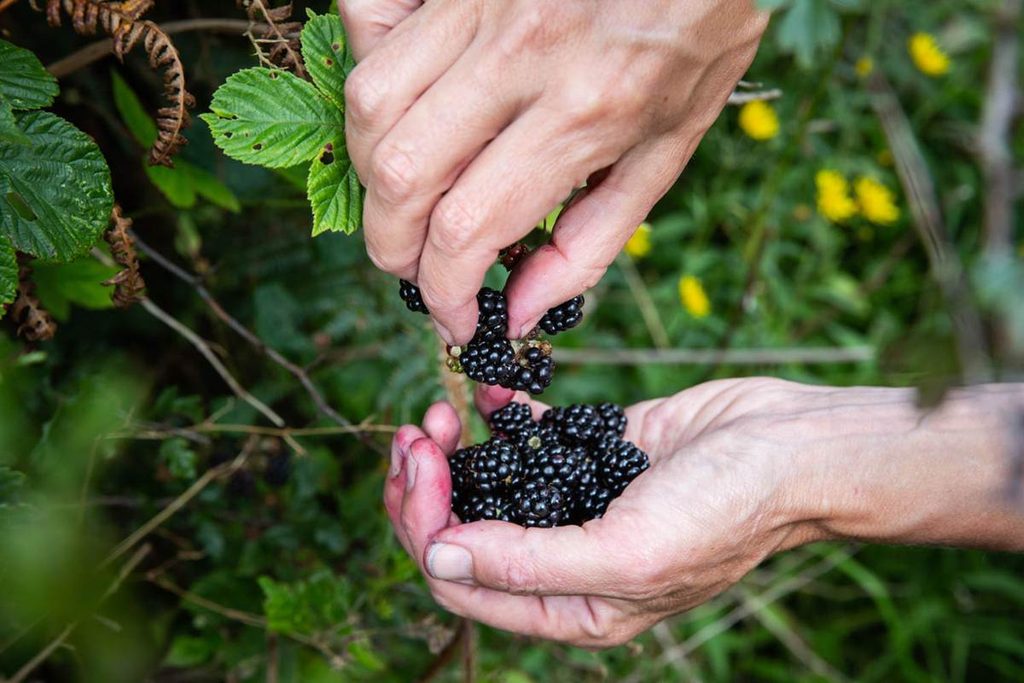
Picking blackberries in West Penwith. Photo by ©Elliott White
Fruity blackberries
Flicking through the pages of the archive’s ‘A Cornish Farmer’s Diary’ by James Stevens, there are diary inserts from September 1877 referring to buying 4 lbs of sugar to ‘preserve blackberries’ and one referring to:
‘Bought half hundred apples for preserving cost 1s 6d, bought 4 lbs sugar at 3½ d per lb…’
With September being harvest time, the preserving of fruit would have rotated around the cutting, drying and winnowing of wheat and barley, the storing of corn and mowing of oats.
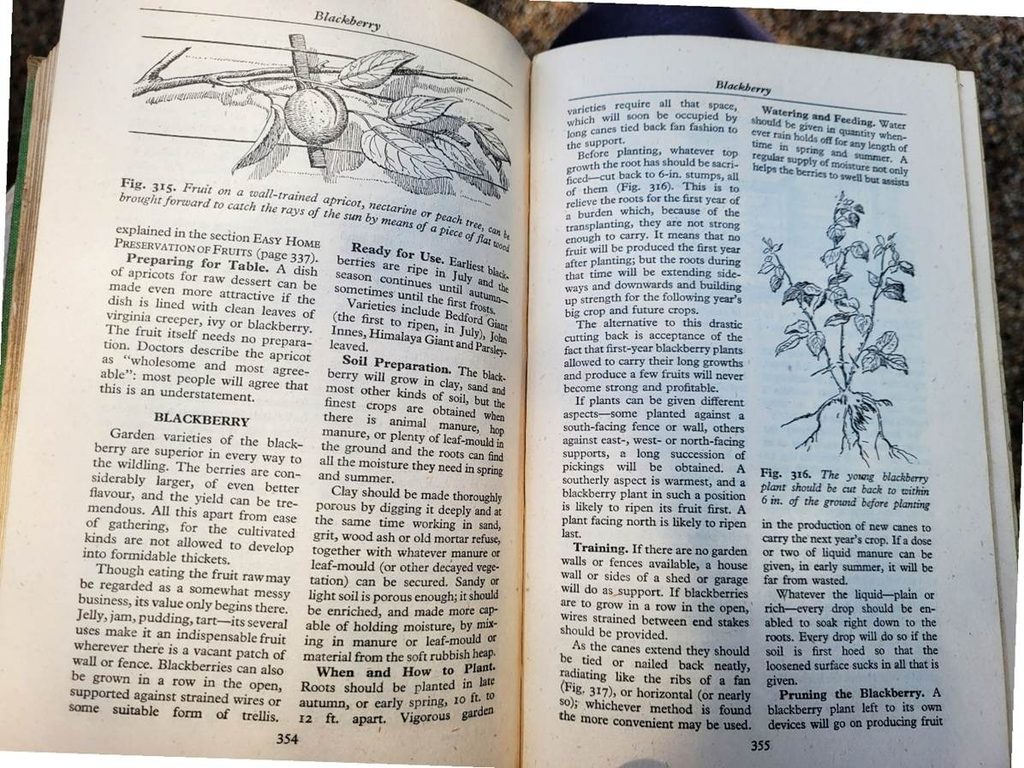
Excerpt from ‘How to Grow and Produce your own Food’ by Charles Boff from The Gardeners’ House archive.
In ‘How to Grow and Produce your Own Food’ by Charles Boff, instructions are shared on how to cultivate blackberries. As a forager, I remember reading how this was useful when finding a particularly tasty and juicy patch of blackberries. Though blackberries rarely need much encouragement to grow.
According to Hamilton Davey (1909) and quoted in ‘Fern, Seed and Fairy Rings – Plants and Plantlore in Cornwall and Devon’ by Rupert White, in Cornwall the blackberry fruit was also known as:
‘moaren, moras, moran-din’
Another book from the archive is all about strawberries and shares tips on the ‘Late Summer Season’ suggesting St Claude strawberries as the best for late fruiting with their beautiful, large leaves and ability to avoid viruses.
From the Gardeners House archive
What will you be collecting in September to mark this fruition and turning of the season?