
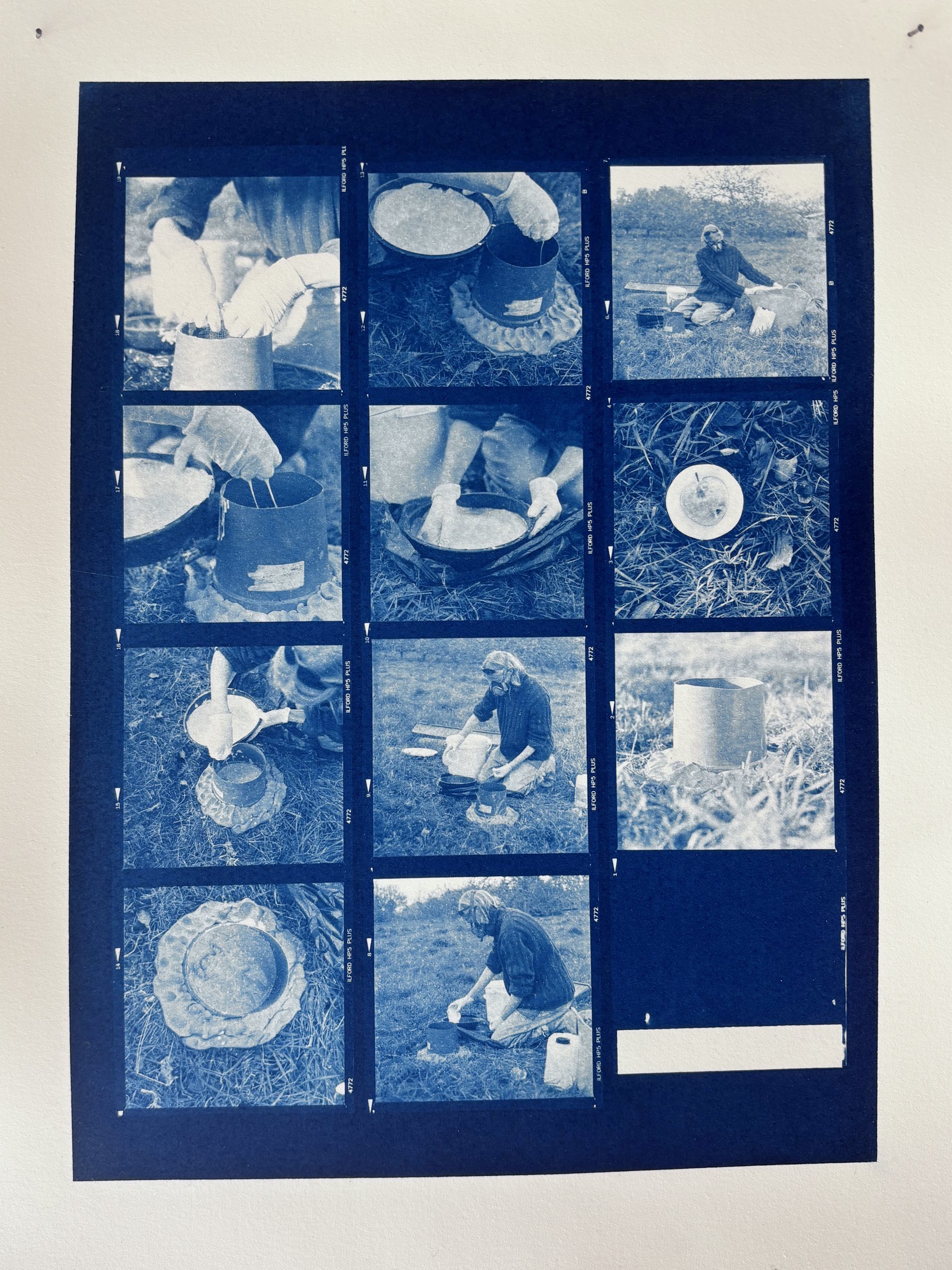
Artists William Arnold and Eleanor Turnbull present their ongoing investigations into orchard biodiversity using analogue photography and mould-making techniques to seek out and get to know their non-human collaborators.
Based on the orchards surrounding Kestle Barton, this body of research in its first year, maps out a single tree’s canopy and windfall, begins to track new grafts as they heal, and preserves intricate beak-pecked patterns appearing on the apples.
The exhibition coincides with the planting of four new Cornish apple trees here in our Sensory Garden, and aims to highlight and celebrate the networks of life sustained by orchards, Morrab Gardens, The Gardeners House and our wider communities.
It’s free of charge – just drop in when you’re passing
—
William Arnold is an artist and photographer interested in the layers of human and natural history that comprise the making of the landscape. William’s work often involves elements of site-specific performance, making use of photography in documenting time and change—the subjective and objective politics of places and their histories.
Eleanor Turnbull is a sculptor and gardener and our current gardener here at The Gardener’s House. Casting directly from the landscape itself, Eleanor adapts mould-making to site, season and tide, redefining the classical process as one of play and exploration, a technology for looking or engaging with the environment.
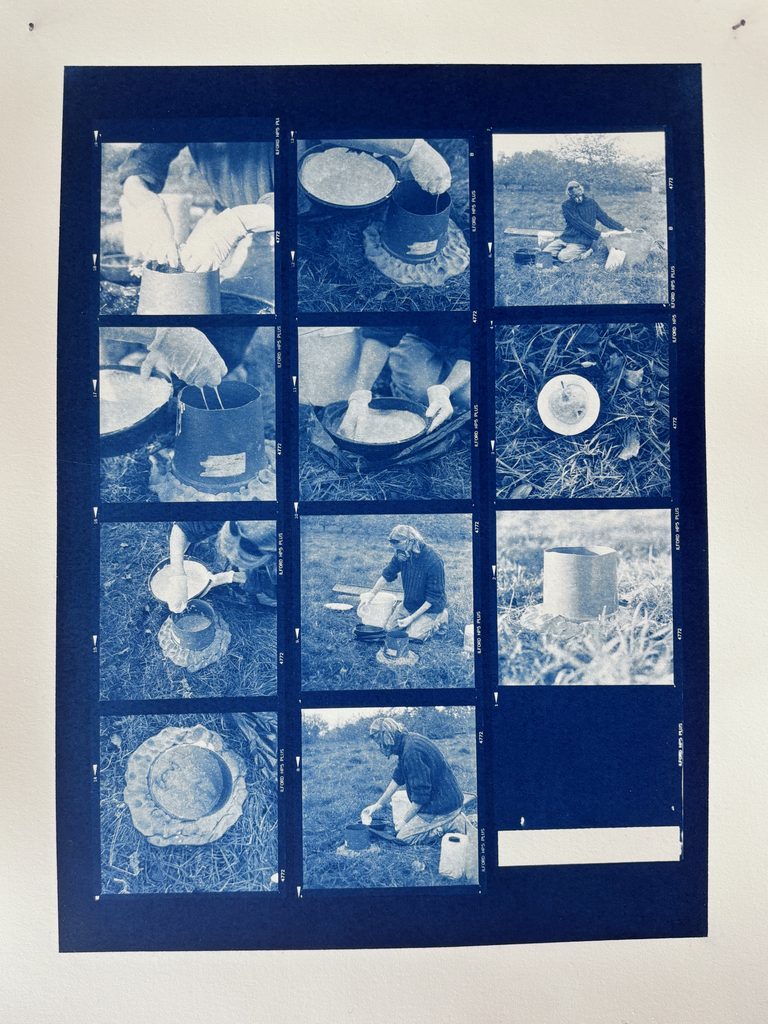
Graft Scars
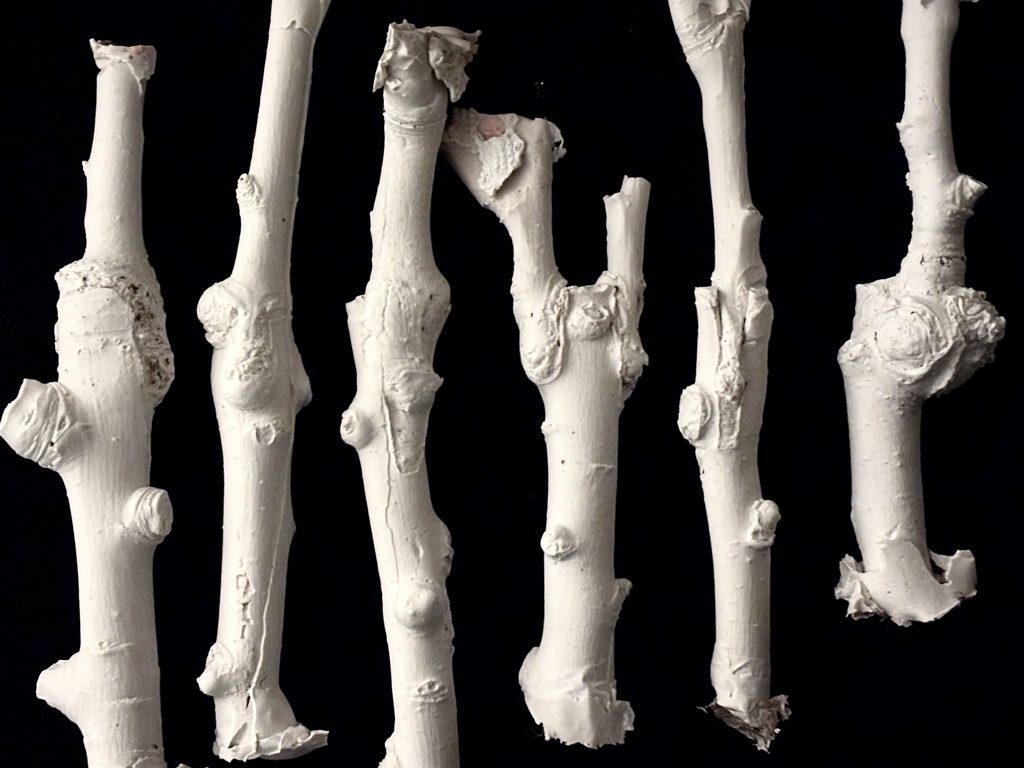
Recorded at around a year old and just after the protective wax breaks away to reveal the first glimpse, these are the healing graft scars on young apple trees. Photographs and casts over successive years will track growth, as the two trees heal into a single apple tree.
Grafting is a propagative method used to grow a particular apple variety. Each apple seed creates a new variety of apple and so to save a particularly tasty or useful apple we need to copy the tree from which it came. A stem section from the tasty apple tree is joined to the root base of a robust tree (often crabapple) and the two trees heal together and grow as one to produce the same apples again.
The grafts studied here are from ‘The Wilding Mother Orchard’, a community orchard on the Lizard peninsular. The trees here are entirely selected from wild apple trees around Cornwall via a series of taste trials, and celebrate the genetic diversity of wild apples. William is a co-founder.
Windfall
A canvas disc plots the windfall under a single ‘Cornish Aromatic’ apple tree on a specific day using camera-less photography techniques. Taking the form of a mulch mat, the discs outer edge maps out the tree’s canopy, the inner circle, its trunk. Where blue indicates exposed areas, white indicates where windfall apples have blocked the sunlight from reaching the light sensitive canvas beneath. A largely blue disc indicates a light crop of apples and therefore little windfall, a small harvest.
Beginning the project in an extremely heavy cropping year William and Eleanor were moved to record the orchards windfall activity in realising that this time last year the disc would have been entirely white.
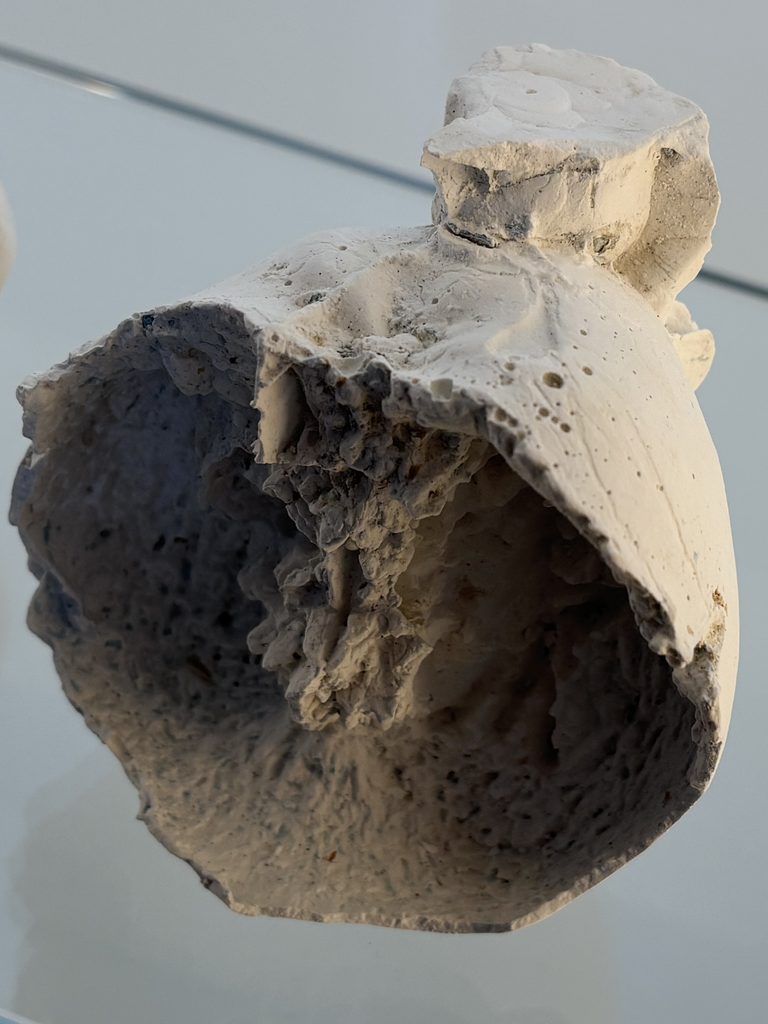
Bird Pecked Apples
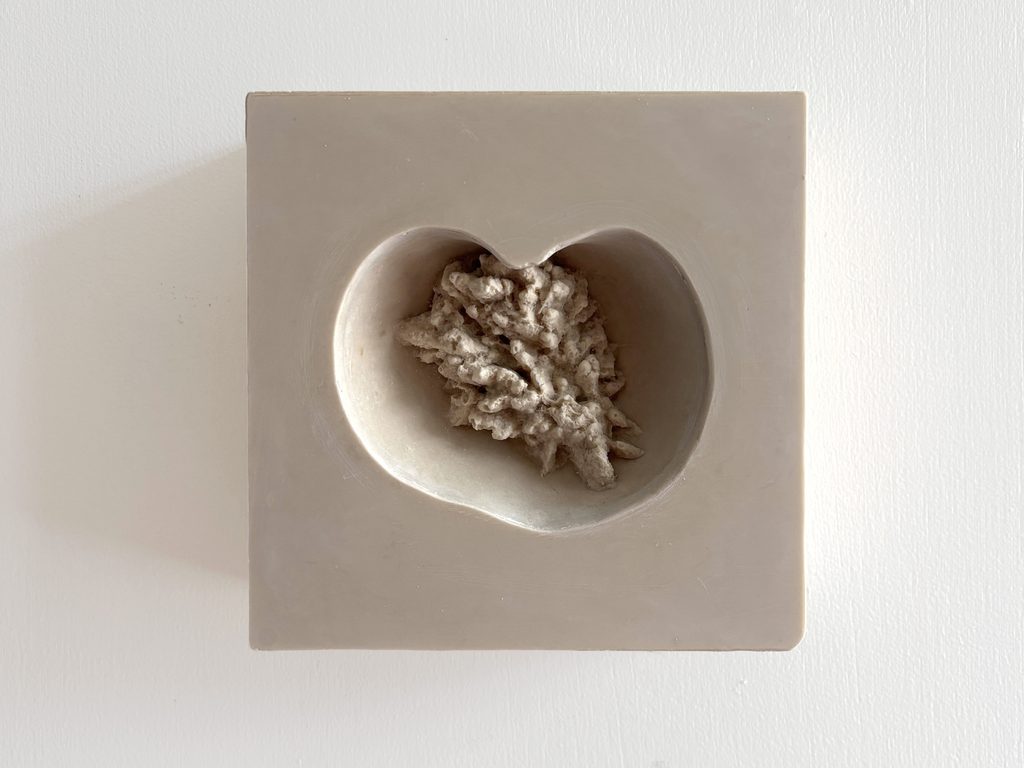
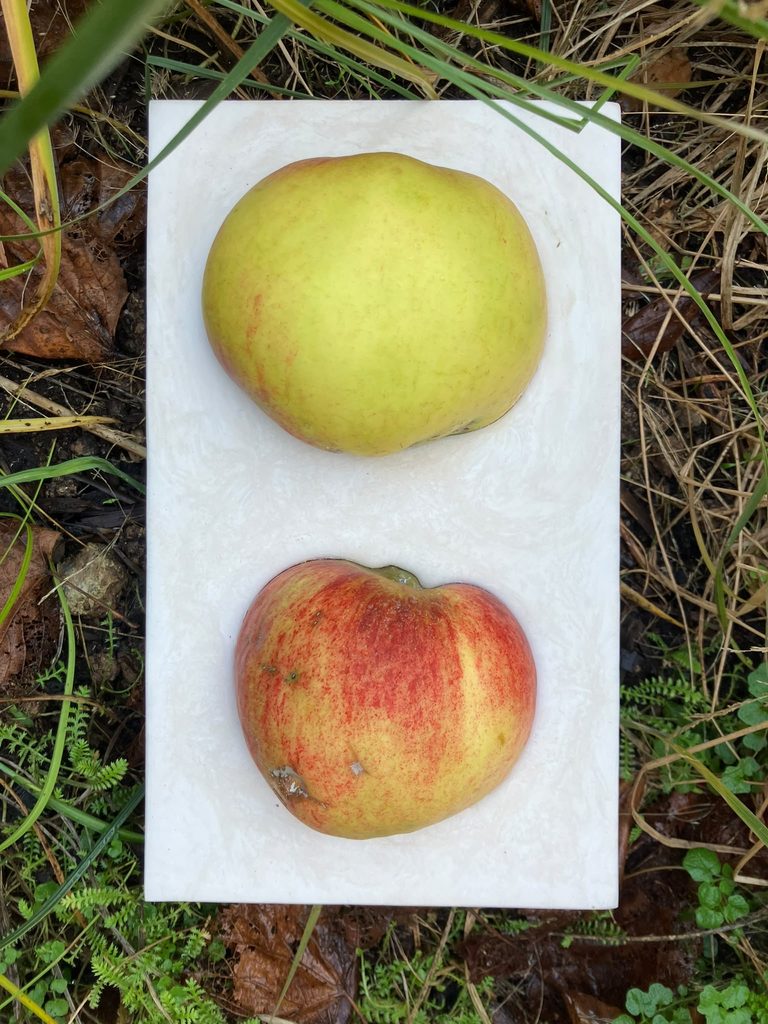
Through preserving these patterns the artists match beak to bird, revealing the diverse range of species sustained and thriving here. From tiny blue tit patterns to the large gouges of crow and magpie beaks, many apples host more than one collaborator. This evolving body of work combines physical photography and mould-making techniques that reframe the artists, the orchard and its ecosystem as co-authors of the work.
Outside in the Sensory Garden, you can find a bird pecked apple ‘set’ into plaster. Left outside to be pecked, munched, and eroded away. This series declares the orchard or in this case, the sensory garden as developer and de-moulding agent. The current image-reveal has been in-progress since the opening of the exhibition.
Inside, other bird-pecked iterations include eco-resin sculptures presenting the bird pecked apples inside-out, making the beak marks ‘positive’ as if you’re looking at the bird itself. Surrounding these, a series of unique plaster apples made from alginate waste moulds, a process that leaves the mould-making process – the pour hole, seams and air bubbles – visible on the final apple. Adjacent are photographs that traps, holds, and therefore illuminates the bird pecked apples in their negative plaster forms, just before their destruction in the next stage of production. Finally, along the internal window are a series of photograms created using latex apple casts in direct contact with light sensitised paper, a type of camera-less photography.
Meet the Artists Day: 27 November, to coincide with Citizen Friday