
Each month, Rachel Lambert – foraging guide, artisan maker and award-winning author – will be writing a journal for us, reflecting on the changing seasons and observations on nature and landscape around us. Rosyansow is the Cornish word for wanderings or ramblings, and for the month of March, she has written about the textures of the hedgerow for us.
According to Cornwall Council, there are over 30,000 miles of Cornish hedges in our county. That’s 30,000 miles where a diversity of plants, insects, rodents, birds, trees and shrubs can potentially thrive.
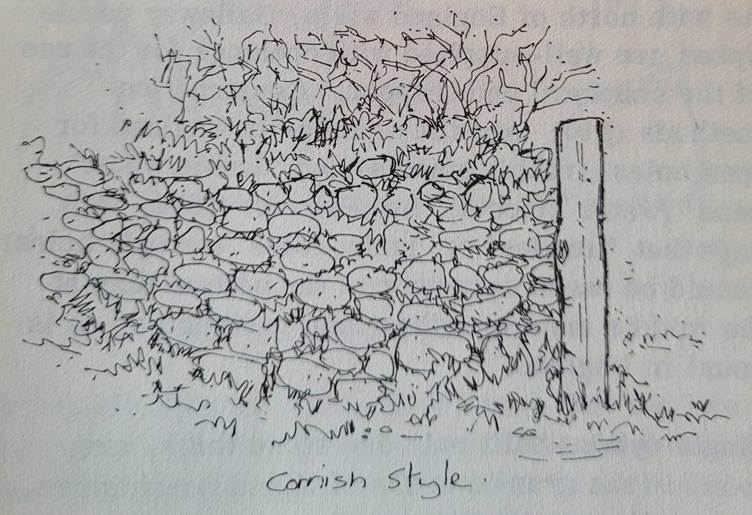
Image from the Gardener’s House archive: Dry Stone Walling – a Practical Conservation Handbook, 1977, BTCV
As spring starts to rear its head, it’s a great time to get out and celebrate our local biodiversity and a Cornish hedge is a perfect place to go, here’s a two-minute activity to get you started!
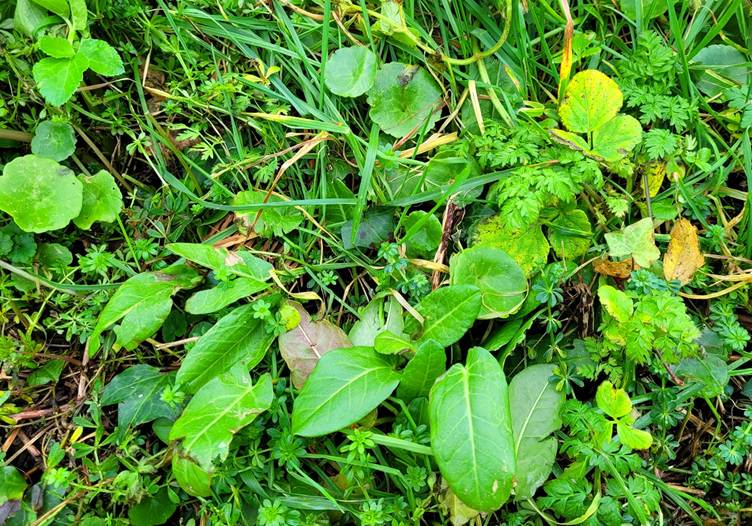
Image of the plant diversity of a Cornish hedge
Task:
Find a hedge nearby and while standing on one spot, take two-minutes to observe all the different shapes, colours and textures. At first it might look like ‘just green’ but as your eyes adjust you’ll find there’s a lot more plants than you first realised.
How many plants did you count?
In a hedgerow I stood by here in West Cornwall, I counted seven: Common sorrel (Rumex acetosa), Hedge bedstraw (Galium mollugo), Wild carrot (Daucus carota), Ivy (Hedera helix), Grass (Poaceae), Alexanders (Symrnium olusatrum), and Pennywort (Umbilicus rupestris).

Image of Pennywort/Navelwort (Umbilicus rupestris) in a Cornish stonewall
Did you know that Pennywort is particularly abundant in Cornwall because of the amount of stonewalls we have? And pennywort used to be used as a Cornish plaster – did you know that?! The lower epidermis was peeled off and placed over the skin where a splinter, boil or spot was to help draw it out.
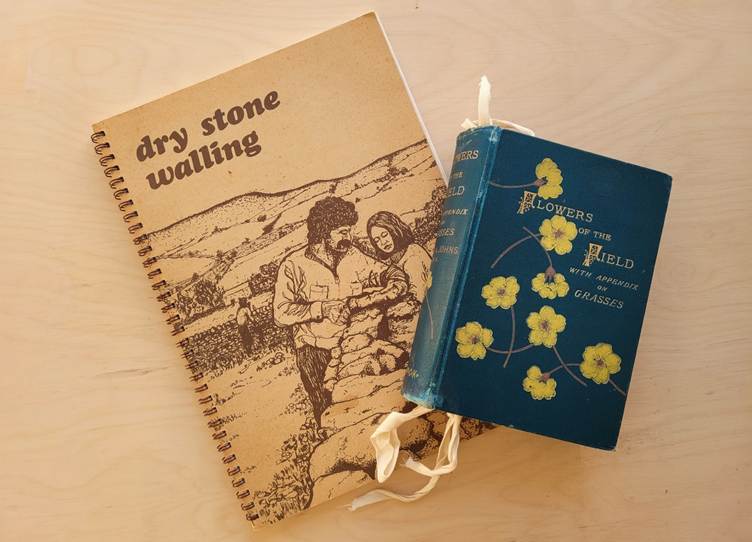
Two books from the Gardeners’ House archive
Plants textures in The Gardeners’ House archive
While it is true that our biodiversity of plants and insects has been diminishing, there are several plants in the GH archive that you can still spot easily in our hedgerows.
For example, have you spotted Cuckoo flower (Cardamine pratensis) with its beautiful shaped leaves and delicate flowers? Or the furry, scallop-edged leaves of Ground Ivy (Glechoma hederacea) also known as Creeping Charlie?*
*Note the change in Latin name since the publishing of the book in the archive.
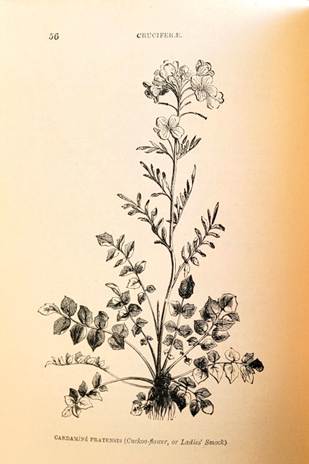
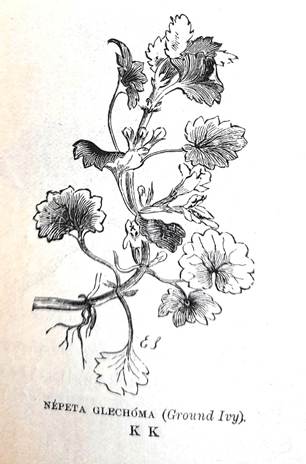
Images from the Gardeners’ House archive: Flowers of the Field book)
And don’t forget the humble dandelion (Taraxacum officinale), of which 80 different species have been recorded in Cornwall .
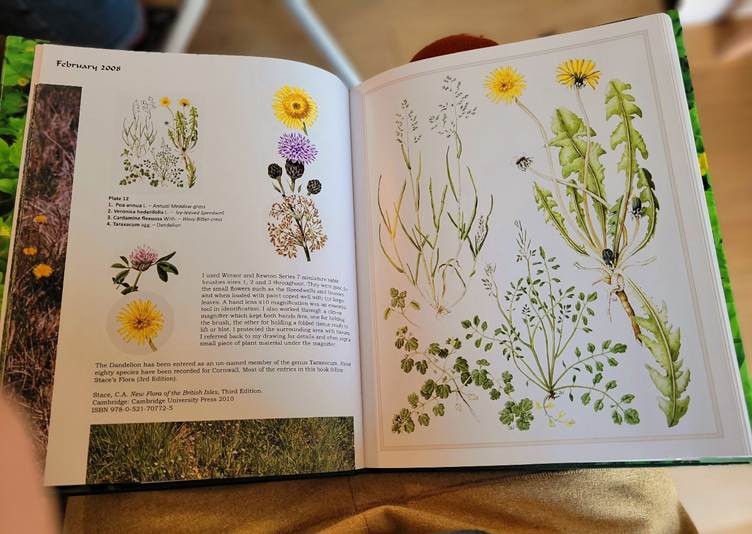
Image from the Gardeners’ House archive: Yellow Pimpernel: Hidden treasures of a Cornish Moor by Jenny Ward
There is so much to explore locally through textures in the hedgerow if we just take the time to look and touch. There are plenty of books at The Gardeners’ House to guide you too, including an award-winning seasonal foraging and cooking book; Wild and Sweet – Forage and Make 101 Seasonal Desserts available for sale – yes, written and created by me!)
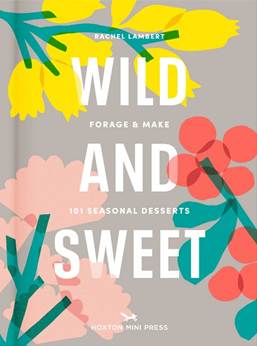
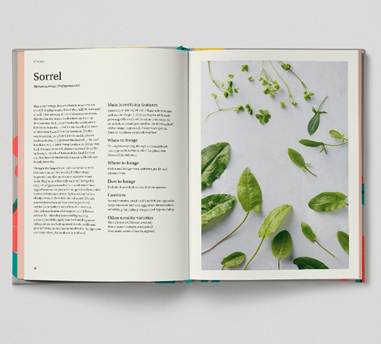
(Wild and Sweet book, available for sale at the Gardeners’ House reception)
Look out for upcoming Textures in Nature activities at the Gardeners’ House throughout March.